Why Nymphaea is the best Neonatal Phototherapy Device for Neonatal Jaundice treatment?
A mother waits for almost 36-40 weeks to see her child, and right after the childbirth, because of some reasons, the child has to stay away from the mother. One of the main reasons for this is Neonatal Jaundice, also known as hyperbilirubinemia. According to the article submitted to the National Library of Medicine, UK, worldwide 1.1 Million newborn develop neonatal jaundice every year, and it ranks seventh in global causes of Neonatal mortality. Not only Neonatal jaundice but also the treatment of Neonatal jaundice contributes to the separation of mother and baby in the initial days. In this blog we will understand everything about Neonatal Jaundice, treatment options and a groundbreaking innovation in which mother and child are together during Neonatal Jaundice treatment
What is Neonatal Jaundice?
After the birth of a child, the production and breakdown of red blood cells (RBCs) occurs
at a high rate. As RBCs break down, bilirubin levels in the baby's body increase.
Normally, the liver processes and removes bilirubin from the blood. But, in the first few
days after childbirth, the liver is still immature and unable to effectively clear bilirubin
from the baby's blood. This condition leads to hyperbilirubinemia, commonly known as
neonatal jaundice. Roughly 60% of term babies and 80% of preterm babies are
affected by jaundice during the first week after birth.
Symptoms of Jaundice in Babies
- Yellow Skin
- Yellow Eyes
- The baby looks sleepier than usual.
- The baby seems fussy and irritable
Neonatal Jaundice treatment options
mild jaundice is often resolved on its own. There are some home-based treatment options, such as
- Indirect Sunlight - This is an age-old treatment method where babies will be exposed to the soft rays of morning sunlight. The natural light breaks down the bilirubin in the skin.
- Adequate Hydration - To flush the bilirubin effectively
- Frequent feeding- Helps baby pass more stool and urine, which clears bilirubin faster.
- Phototherapy -
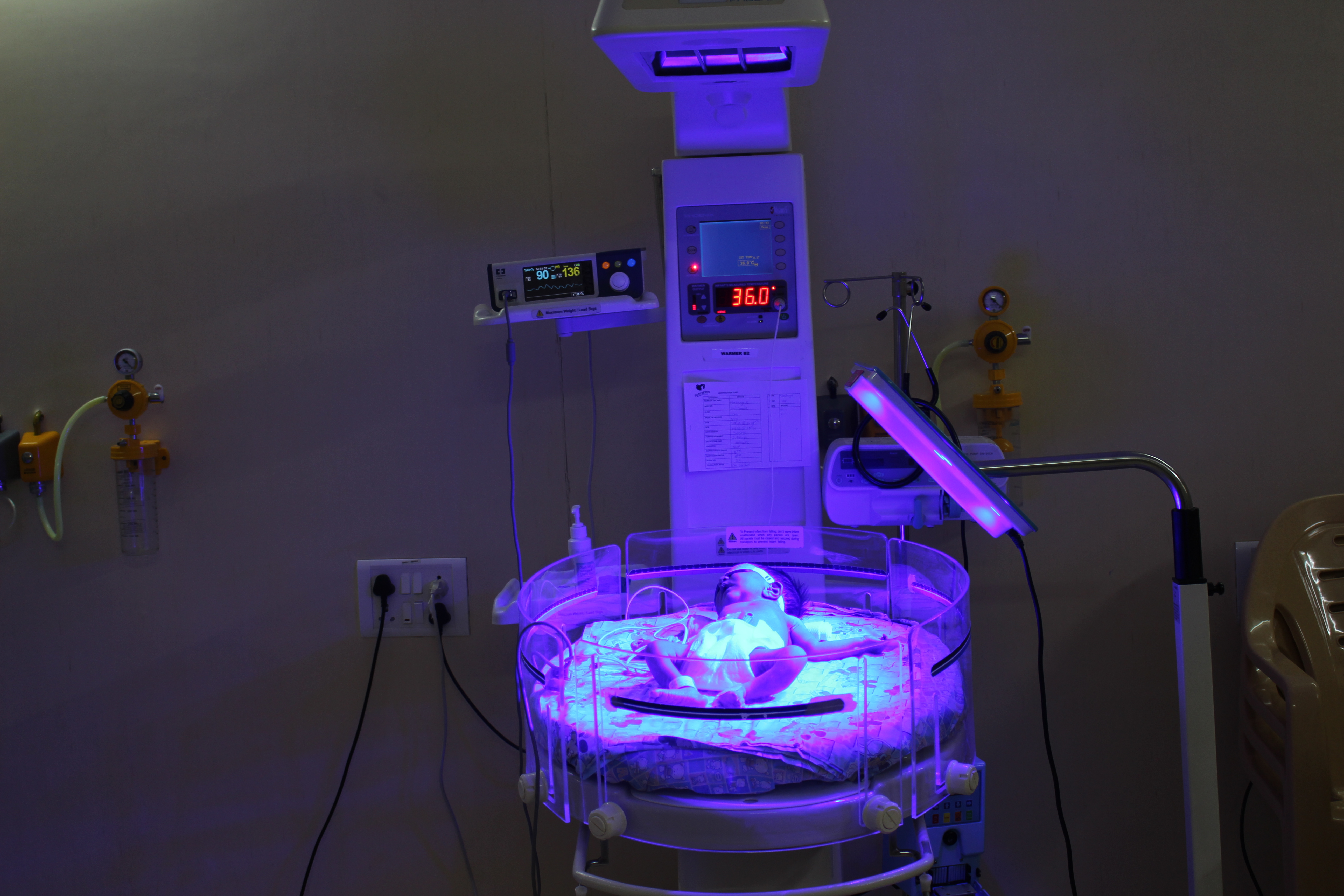
Phototherapy is the standard of care in Mild to Sever Jaundice treatment and In Phototherapy using blue light of wavelength 450nm ( 420-490 nm) is used. Bilirubin is broken down and removed from the baby's body via excreta. In a regular setup of NICU, conventional therapy is delivered using overhead lights, also known as Neonatal Phototherapy Device. Most of the Phototherapy devices are LED Phototherapy devices.
How most of the Neonatal Phototherapy devices are separating mother and child
Usually, the newborn is placed under the phototherapy device, which means the baby cannot be in the mother's arms for an extended period. This temporary separation can be emotionally challenging for the mother. The research by P.Abrol ( 1998) found that babies separated for Phototherapy showed poorer behavioral scores in visual and interactive responses, and this was likely due to reduced closeness with the mother. Observations by healthcare experts speak on how mother-infant separation during Phototherapy treatment can increase neonatal stress, disrupt their bonding and elevate parental anxiety. That's why many modern hospitals are working on solutions to reduce separation. That is where the need for new portable phototherapy devices comes into play.
What is Kangaroo Mother Care?

Kangaroo mother care is a Scientifically proven method of treating preterm babies or babies with less body weight by keeping them in skin-to-skin contact with the mother or Father
- The newborn, wearing only a diaper and cap, is placed upright on the mother's or father's bare chest.
- The Mother or father’s body warmth acts like a “natural incubator.”
- Kangaroo Mother care allows the baby to hear the mother’s heartbeat and feel her breathing, which gives comfort and security.
Meet Nymphea—a sleek, lightweight device for managing neonatal jaundice.
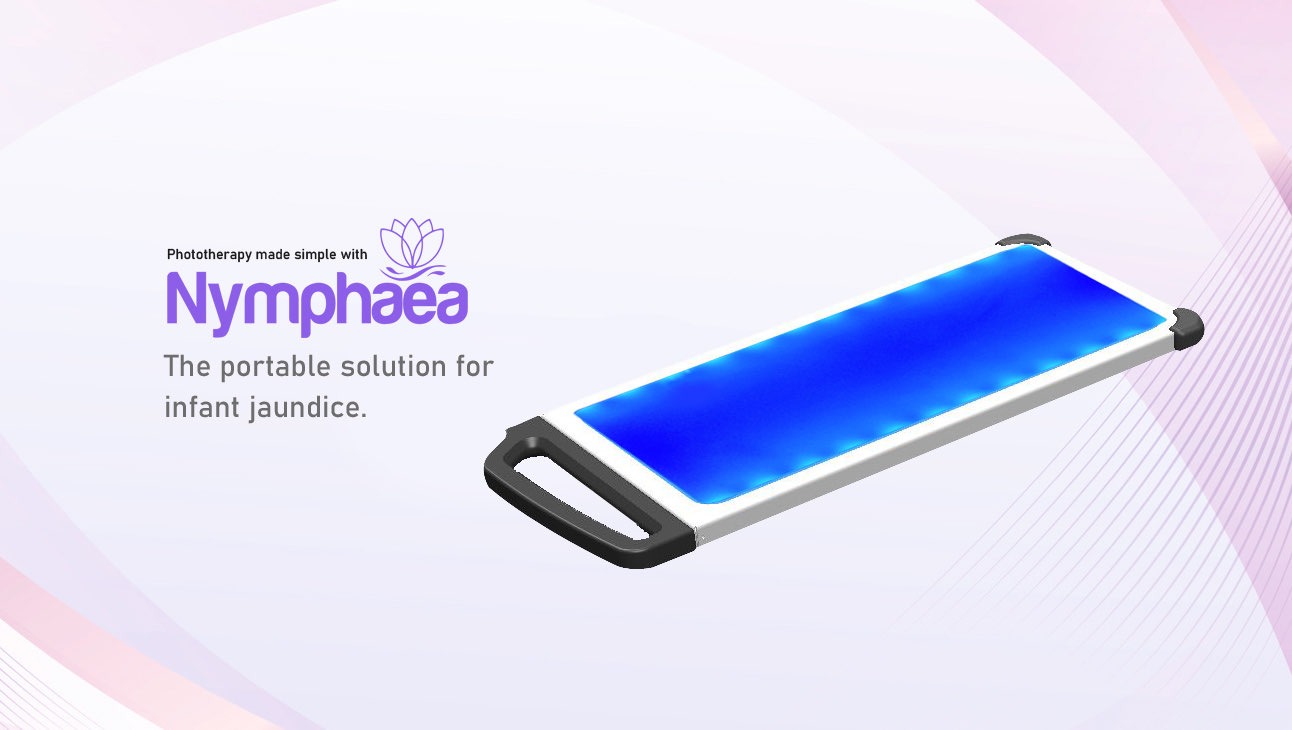
Nymphaea is a Portable Phototherapy device for newborns designed by Phoenix Medical Systems with the dual purpose of strengthening mother-infant bonding while delivering therapy. It can easily slide under any bed, incubator or bassinet. Nymphaea is combined with an air mattress cocoon for the safety and effective Phototherapy of neonates, intuitively designed in a compact surface of 24 LEDs, and hence stands out for its longest LED Lifetime of 100000 hours.
Nymphaea, the undersurface Phototherapy device is extremely beneficial, as the need to shift the baby to a particular Phototherapy station is not required, and so the baby remains with the mother during the Neonatal Jaundice treatment. With the proven results of Kangaroo Mother care (KMC), combined with Phototherapy lowers bilirubin faster as mothers' skin, touch and presence aid quicker recovery of infants compared to standard care and, besides, allows mothers frequent breastfeeding and reduces stress of the child.
Why Nymphaea is the Best Neonatal Phototherapy Device?
Lightweight and Portable - Nymphaea is a Portable Phototherapy device and it can be used anywhere, including NICU’s Paediatric wards and labor rooms, and supports in Jaundice treatment in Newborns.
Uniform Light Distribution-
.png)
Nymphaea being an LED Phototherapy device, It intuitively designed in a compact surface of 24 LEDs, which helps in uniform light distribution. Due to which the infant receives an equal amount of intensity throughout the Neonatal Jaundice treatment.
Effective and Large Surface Area -
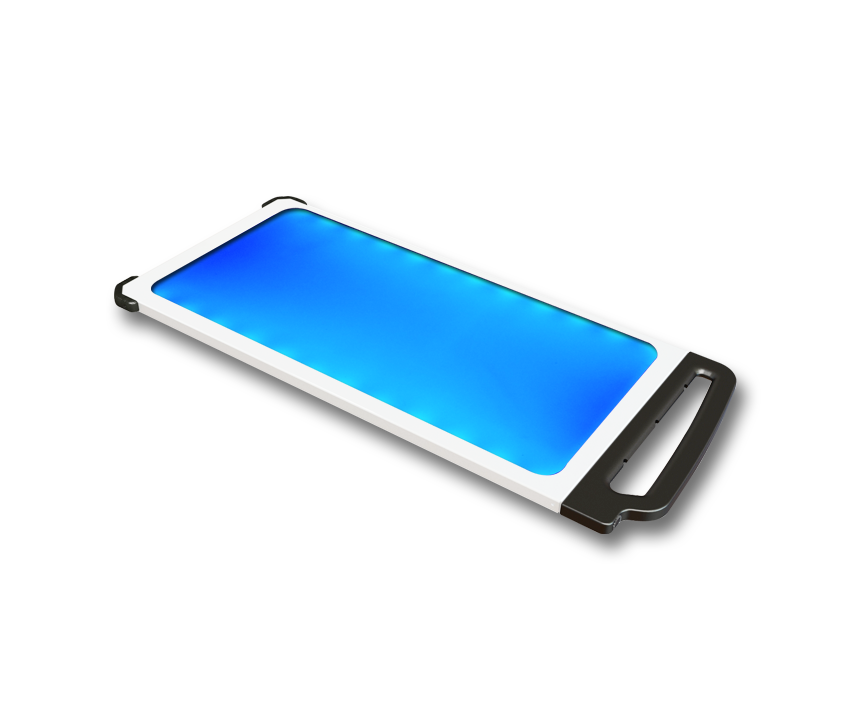
Nymphaea maximizes coverage of the baby's
body surface area with the aid of a cocoon that includes a specially designed air
mattress. This design ensures comfort and safety for the neonates receiving treatment.
Slim Sleek and Seamless -
Nympheas's slim design helps it slide under baby's bed easily. It can be used in the X-Ray slot of Infant Radiant Warmers.
Safety Alarm System - Nymphaea Features audible and visual alarms. The Audible alarm indicates the power failure, and the visual alarms indicate power on, open/short circuit, and power failure.
Minimal Maintenance - Nymphaea reduces the LED replacement cost with its 80,000 hours lifetime of LEDs.
Conclusion
With advancements in research in Neonatology, there is a growing demand for Neonatal Phototherapy devices that allow for therapy without separation. This practice is supported by substantial evidence and has been made possible by devices like Nymphaea, which helps in effective neonatal jaundice treatment, preserves the closeness between mother and child, facilitates frequent breastfeeding, and supports the mental health of both mother and baby. "By drawing a conclusion about portable Phototherapy device combined with Kangaroo Mother Care, we can effectively treat neonatal jaundice while strengthening the newborn and mother bond."